
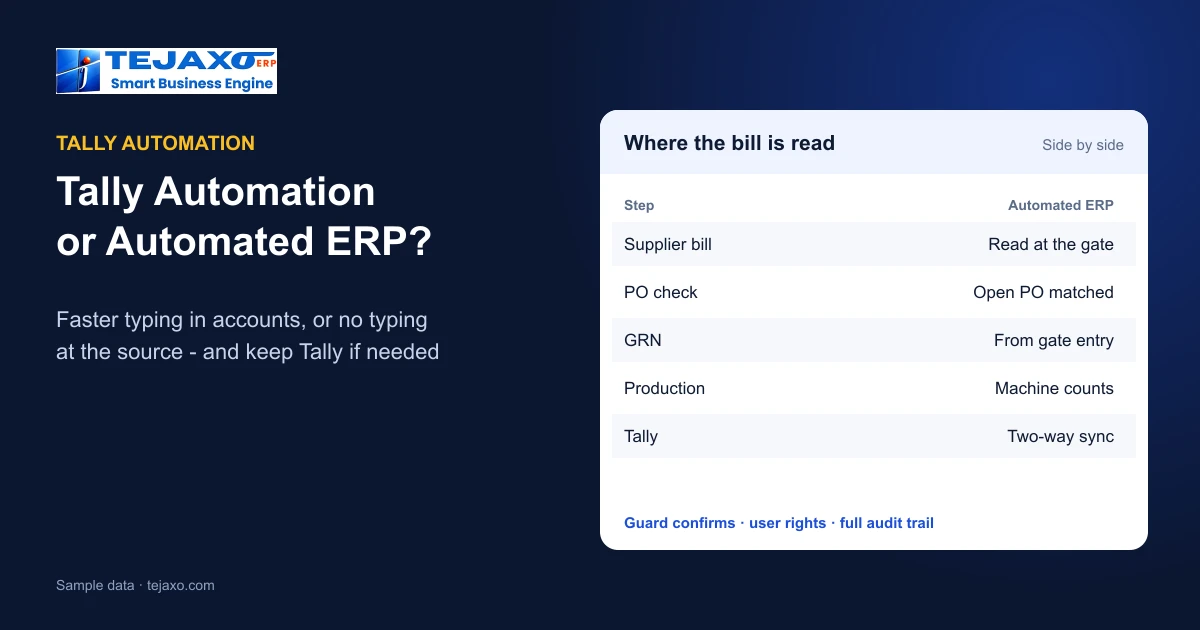
Tally automation tools read supplier bills and bank statements and post vouchers in Tally faster, so the accounts team types less. An automated manufacturing ERP goes one step earlier: the bill is read at the gate, stock and production are recorded where they happen, and the accounting entry follows without anyone re-typing it. If only the accounts desk is overloaded, Tally entry automation may be enough; if stock, GRNs, production and costing are also kept by hand, the factory needs an automated ERP – which can still exchange data with Tally.
What Tally entry automation does
Tally entry automation is a category of add-on tools around Tally. In general, they take a document that has already reached the accounts team – a purchase bill as PDF or photo, a bank statement, a sales register in Excel – read it, map parties and ledgers, and create the voucher in Tally after an accountant checks it.
This solves a real problem: the hours spent typing bills that someone else has already typed once, on the supplier’s side. It suits a business where accounts is the main system and the rest of the operation is small or simple. What it does not change is where the data starts. The material was received at the gate, checked in stores and consumed in production before the bill ever reached accounts – and in a factory those steps are usually where the delays and mismatches are.
What an automated manufacturing ERP does differently
An automated ERP captures each piece of data once, at its source, and lets every later document pull from it. In Tejaxo ERP:
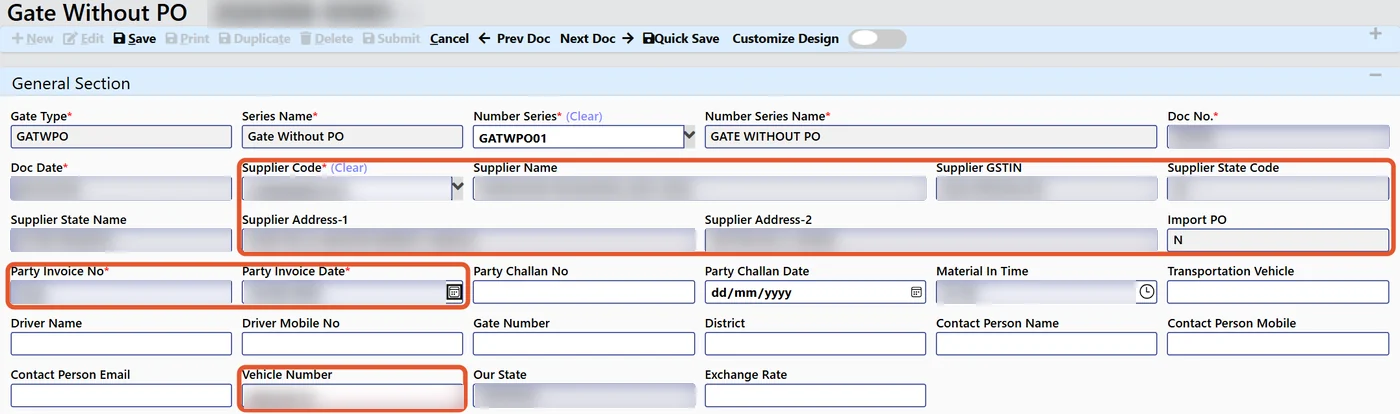
- Supplier bill at the gate: AI gate entry reads a PDF, JPG, PNG or phone photo of the supplier invoice for GSTIN, vendor, bill number and date, vehicle, items, quantity, rate and taxes. It checks the vendor and plant against masters, blocks duplicate bills, matches the open purchase order and highlights errors; the guard confirms the pre-filled gate entry.
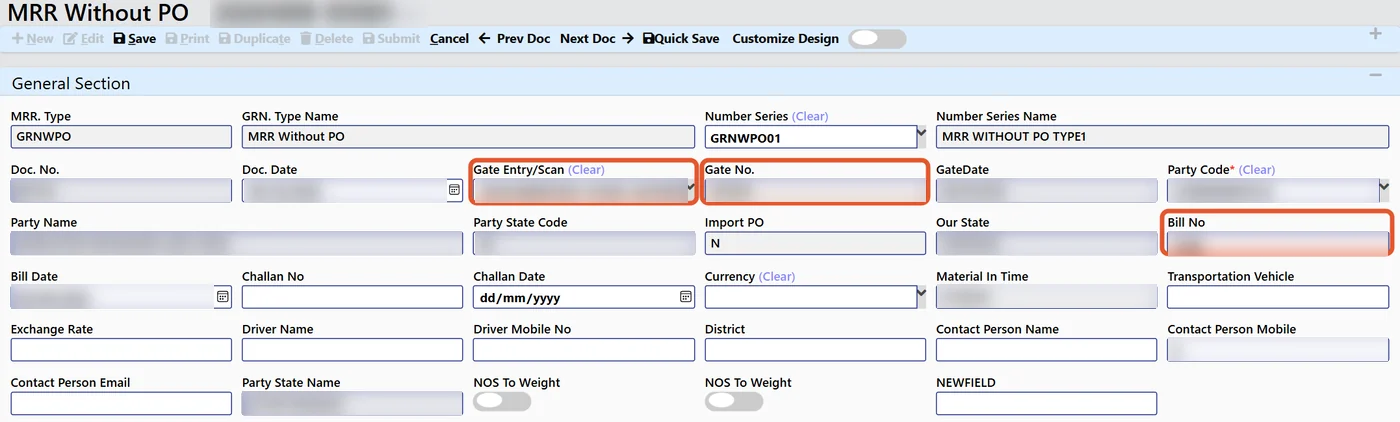
- Stores and quality: the GRN (MRR) is made against the gate entry and carries the gate number and bill details forward; quality records accepted and rejected quantity.
- Purchase voucher: requisition, purchase order, gate entry, GRN and purchase voucher are one chain, so the accounting entry comes from documents already checked on the floor.
- Shop floor: machine-to-ERP is live at a client – CNC and VMC machines send cycle counts, run and idle time and OEE through the Tejaxo connector.
- People: sales orders, expenses and receipts can be spoken or typed on WhatsApp in Hindi, English or Hinglish; WhatsApp asks for any missing mandatory field before the entry is saved.
The full flow from bill to GRN is described in AI invoice processing for manufacturers, and the source-by-source checklist in zero manual data entry in a factory.
Side by side: Tally entry automation vs an automated ERP
| Question | Tally entry automation | Automated manufacturing ERP |
|---|---|---|
| Where the bill is read | At the accounts desk | At the gate, when the material arrives |
| PO and GRN check | Usually outside the tool | Open PO matched; GRN made against the gate entry |
| Duplicate bills | Depends on the tool | Blocked at gate entry |
| Stock and batches | As kept in Tally | Batch-wise, from gate to dispatch |
| Production and machine data | Not covered | Work orders, job cards, machine counts |
| Who enters data | Accounts, faster | The source: gate, stores, machines, WhatsApp |
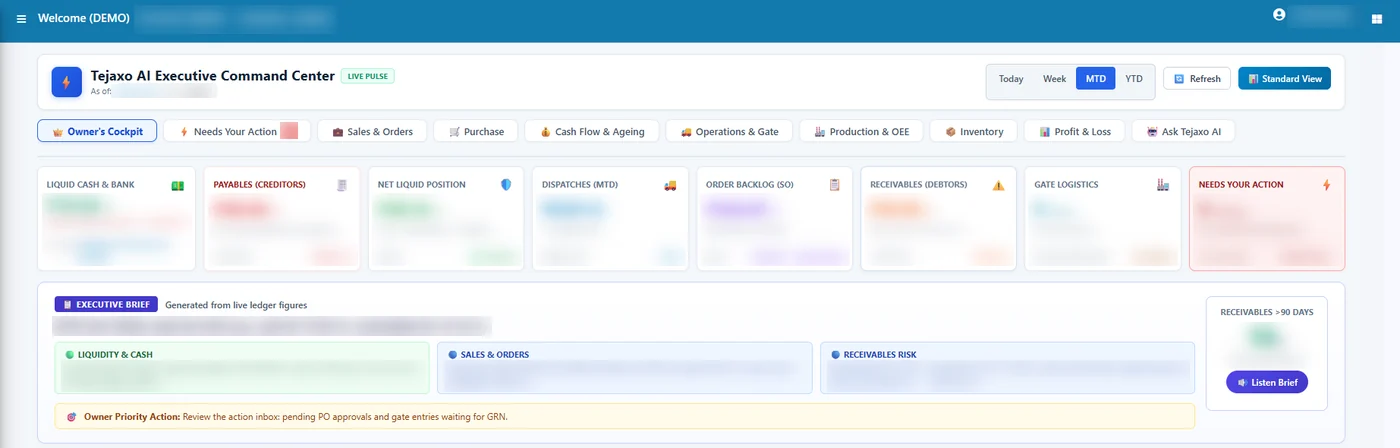
| Owner’s view | Accounts reports | Live cockpit across cash, orders, stock and gate |
| Effort to start | Small | A project: masters, pilot, training |
Which one does your factory need?
Tally entry automation is usually enough when:
- the main pain is the volume of bills and bank entries in accounts;
- stock is small or simple and there is no real production planning;
- GRNs, issues and production are not tracked item by item.
An automated ERP is the better fit when:
- bills reach accounts days after the material arrived, and the GRN does not match the bill;
- stock in Tally does not match the store, or batches cannot be traced;
- production, scrap and job work are kept in Excel or registers;
- costing per work order is guessed rather than calculated;
- the owner learns about dues, dispatches and pending approvals only by phoning people.
These signs are covered in more detail in when to move from Tally to an ERP: 9 signs for manufacturers.
You do not have to drop Tally
Moving to an automated ERP does not have to mean switching off Tally on the first day. Tejaxo connects to Tally with two-way sync of masters, vouchers and GST data, using APIs, database connectors, scheduled sync or secure file exchange – without changing Tally’s core. The Tejaxo Tally bridge moves sales invoices, purchase bills, receipts, ledgers and stock items in both directions, and it is live at many Tejaxo clients – see Tally integration with Tejaxo ERP. Our approach for companies on an existing system is “We don’t replace your ERP. We extend it.”
A common path is to run gate, stores, production and dispatch in Tejaxo ERP while accounts continue in Tally, and to move accounts later if the team wants one system. Tejaxo ERP has its own finance and compliance features – GST returns are prepared and filed from the ERP – so the move can happen when it suits the accounts team, not before.
How to decide in one month
- Count the typing. For one week, note how many bills, GRNs, issues, production entries and sales orders are typed, and by whom.
- Find where the mismatch starts. If the errors begin at the gate or in stores, an accounts-side tool cannot fix them.
- See it on your own data. In a free consultation, the second demo is run on your own items and customers.
- Pilot one plant for a month. Upload items, parties and BOMs, run a live month, and compare the figures with your current registers and Tally before deciding on the rest.
For the wider picture, read Automated ERP: what runs without manual entry and AI ERP vs traditional ERP, or book a free consultation to go through your own bills and registers with us.
Frequently asked questions
What is Tally automation?
Tally automation tools read documents such as purchase bills and bank statements, map parties and ledgers, and post vouchers in Tally after an accountant checks them, so the accounts team types less.
Is Tally entry automation the same as an automated ERP?
No. Tally entry automation speeds up posting in accounts. An automated ERP captures data at its source – the gate, stores, machines and WhatsApp – so later documents, including the accounting entry, are built from it without re-typing.
Can we keep Tally if we move to Tejaxo ERP?
Yes. The Tejaxo Tally bridge moves sales invoices, purchase bills, receipts, ledgers and stock items in both directions without changing Tally’s core, so operations can run in Tejaxo ERP while accounts continue in Tally.
How does Tejaxo ERP handle supplier bills?
AI gate entry reads the bill from a PDF or phone photo, checks the vendor and plant, blocks duplicate bills and matches the open purchase order; the guard confirms the pre-filled gate entry and the GRN carries the details forward.
When is Tally entry automation enough?
When the main problem is the number of bills and bank entries in accounts, and stock, production and GRNs are small or not tracked item by item.
How do we decide which one we need?
Count who types what for a week, find where mismatches start, see a demo on your own items and customers, and pilot one plant for a month before deciding.