
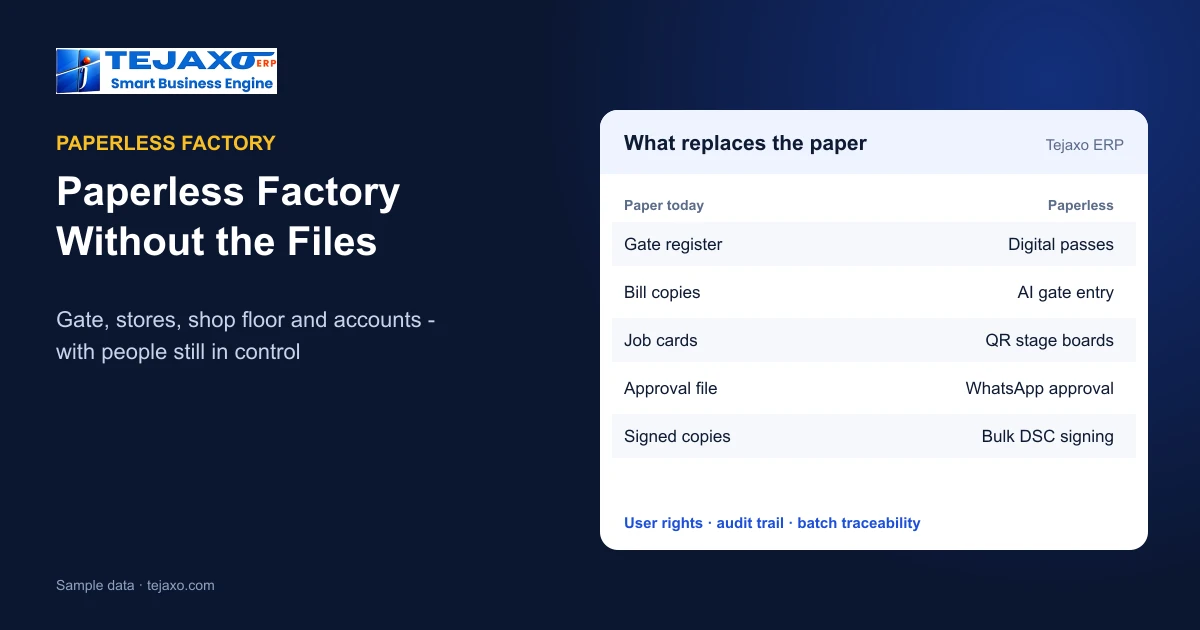
A paperless factory is one where the gate register, the store slip, the job card, the approval file and the signed invoice copy are replaced by records that are created once in the ERP, approved on the phone and found again in seconds. It is reached department by department, not in one go. This guide walks through the gate, stores, shop floor, approvals and accounts, and shows what Tejaxo ERP uses in place of each piece of paper – while people keep every decision.
Why paper still runs most factories
Walk through a typical plant in the Delhi NCR belt and you will find paper at every handover: a register at the gate, a carbon-copy material receipt in stores, a job card travelling with the material, a purchase order waiting in a file for the owner’s signature, and a cupboard of signed invoice copies in accounts. Each sheet is written once by hand and then typed into a system later, if at all.
The cost is not the paper. It is the waiting and the searching. A purchase order waits two days because the owner is travelling. A customer complaint takes an afternoon because someone has to find the job card for a batch made three months ago. An audit query means pulling files from the store room. Going paperless removes the waiting (approvals reach the phone) and the searching (every record is linked to the one before and after it).
Paper vs paperless: department by department
| Department | Paper today | Paperless in Tejaxo ERP |
|---|---|---|
| Gate – visitors | Visitor register, handwritten slip | OTP self-registration, host approval, digital visitor pass |
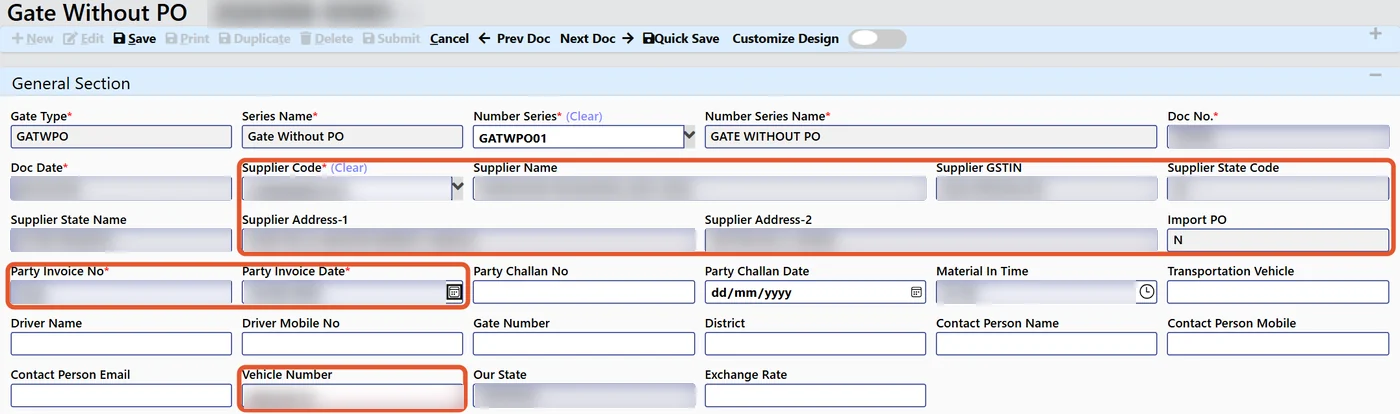
| Gate – material | Inward register, copy of the bill | Gate entry pre-filled from a photo or PDF of the supplier bill |
| Gate – job work | Handwritten returnable challan | RGP (returnable gate pass) in the ERP, with pending quantity |
| Stores | Material receipt book, bin cards | MRR / GRN against the gate entry, barcode and QR labels |
| Shop floor | Job card, production slip, downtime sheet | Production entry per stage on boards, QR scanning, downtime reasons |
| Approvals | File waiting for a signature | PR, PO and payment approvals on WhatsApp |
| Accounts | Printed and hand-signed copies | Bulk DSC (digital signature) signing with a signing-run history |
| Suppliers | Bills and challans by courier | Supplier portal: vendors upload invoices and challans |
1. Gate: registers, passes and slips
The gate is where most factories start because it produces the most paper. In Tejaxo ERP:
- Visitors register themselves with an OTP, the host approves, and the visitor gets a digital pass. Checkout records the duration and status of the visit, so the register becomes a report. QR passes and a watchlist are available at the gate.
- Inward material: the guard takes a photo or uploads the PDF of the supplier invoice. AI gate entry reads the GSTIN, vendor, bill number and date, vehicle, items, quantity, rate and taxes, blocks duplicate bills and matches the open purchase order. The guard checks and confirms – nothing is written in an inward register.
- Job work goes out and comes back on a returnable gate pass created in the ERP. The pending quantity with each job worker is always visible, instead of being worked out from a challan book. See job work software with returnable gate pass.
2. Stores: receipts, labels and issue slips
The material receipt (MRR / GRN) is made against the gate entry and carries the gate number and the supplier’s bill details forward, so the store keeper does not copy them from a sheet. Incoming quality records accepted and rejected quantity in the same flow. A party’s bill number cannot be repeated, and there is one gate entry and one purchase voucher per MRR, which keeps the paper-era duplicate entries out. For how the bill is then checked against the order and the receipt, see 3-way match and GRN invoice matching.
Barcode and QR scanning and serial-number tracking are live at Tejaxo clients. Labels printed from the ERP replace hand-written bin cards, and issue to production follows FIFO by batch. Suppliers can also send their side digitally: through the supplier portal they self-register and upload invoices and challans, and the advance shipping notice tells stores what is coming. Read more on warehouse management software and the ASN and supplier portal.
3. Shop floor: job cards and production slips
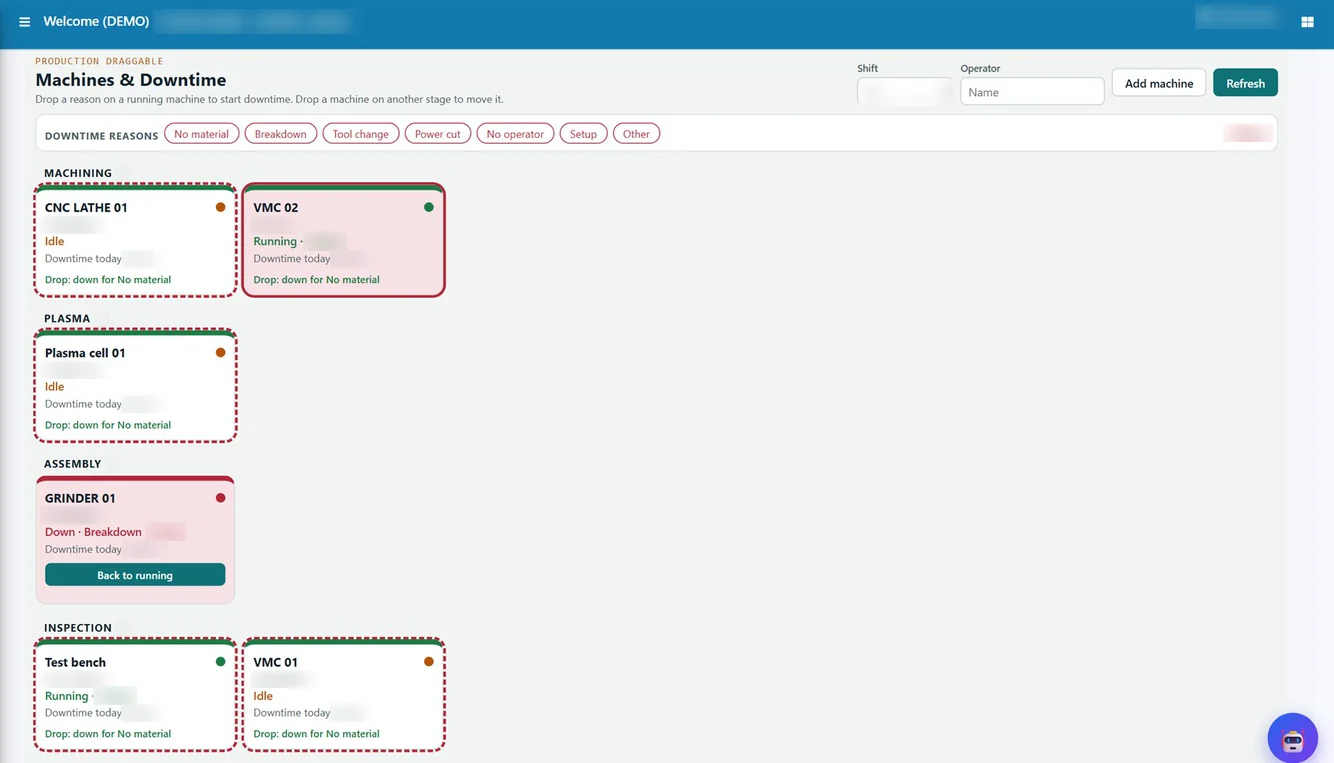
On the shop floor the paper is the job card that travels with the material and the production slip filled at shift end. Tejaxo’s Production Draggable boards replace both. Every stage of a job is one production entry against the same job; lot and QR labels go on the material, and QR scanning on the stage board moves the job forward. Downtime is recorded by dragging a reason onto the machine rather than writing it on a sheet. The PDI checklist and the quality board with NCR keep inspection records with the job instead of in a separate file.
Where machines are connected, CNC and VMC cycle counts and OEE reach the ERP directly, so the production slip is not needed at all for those machines. See drag-and-drop production control boards.
4. Approvals: the file that waited for a signature
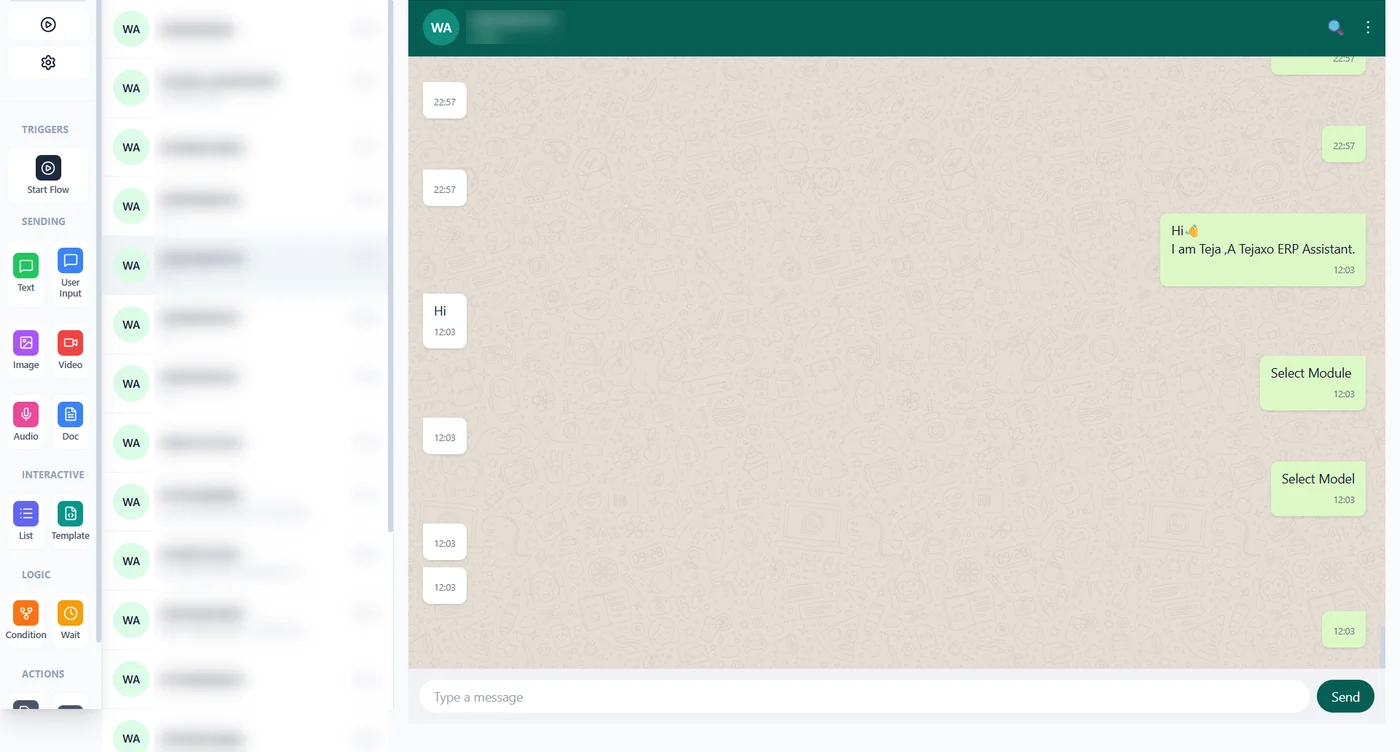
The approval file is the slowest piece of paper in a factory. In Tejaxo ERP, purchase requisitions, purchase orders and payments reach the approver on WhatsApp and can be released from the phone, under the same approval rules as on screen. The Owner’s Cockpit also has an action inbox with one-click PO approval. Approval workflows and menu rights decide who can approve what; nothing changes in control, only the paper and the wait disappear. Details in approval workflows and user rights in ERP.
5. Accounts: signed copies and physical files
Accounts keeps paper mainly for signatures. Tejaxo’s bulk DSC signing signs documents in one run – especially invoices, debit notes, credit notes and vouchers – and keeps a signing-run history and an exception list for anything that did not sign. Tejaxo also provides DSCs. The signed PDF can be sent to the customer on WhatsApp instead of printing, signing and scanning. See automatic digital signature on documents.
Purchase vouchers are matched three ways to the PO and the receipt on screen, so accounts does not need the store’s paper copy to pass a bill. Each document pulls from the one before it – quotation to sales order to packing slip to invoice to receipt – which is what makes a paperless office practical: nothing has to be re-written from a printed copy.
Finding a document later
The real test of a paperless factory is the day someone asks a question about the past. In Tejaxo ERP, batch numbers are carried through every step, forward and backward: sales order, work order, job card, requisition, PO, gate, MRR, QC, issue, operations, finished-goods batch, packing slip and invoice. Starting from a customer complaint you can reach the supplier bill of the raw material, or the other way round, without opening a cupboard. Every entry, approval and AI action is in the audit trail with who, what and when. And the owner can ask for any report or graph by speaking or typing on WhatsApp; it comes back as an image with a link to the same report in the ERP – see voice ERP on WhatsApp.
What paper you may still keep
Paperless does not mean that no page is ever printed. Some documents may still be needed on paper because a customer, a transporter or a regulation asks for them; in a paperless factory these are printed from the ERP when needed, not written by hand and typed in later. The goal is that paper is an output of the system, never its input.
A practical order to go paperless
- Gate first. Visitor passes, gate entry from the bill photo and returnable gate passes remove the largest registers in the first weeks.
- Then approvals. Moving PR, PO and payment approvals to WhatsApp is the change the owner feels most.
- Then stores and labels. MRR against the gate entry, QR labels and scanning.
- Then the shop floor. One line or one department on the production boards, compared against the old job cards for a few weeks.
- Accounts last. Bulk DSC signing and digital copies once the documents feeding accounts are already digital.
For the typing side of the same change, read zero manual data entry in a factory: a practical checklist and Automated ERP: what runs without manual entry, or book a free consultation to walk through your own plant’s paper with us.
Tejaxo Technologies is an ERP software company in Delhi NCR that builds and implements its own manufacturing ERP, so the same team that maps your paper flow also supports the system after go-live.
Frequently asked questions
What is a paperless factory?
A factory where registers, slips, job cards, approval files and signed copies are replaced by ERP records that are created once, approved on the phone and found again in seconds. Paper is printed from the system only when someone outside needs it.
Where should a factory start going paperless?
Usually at the gate: digital visitor passes, gate entry from a photo of the supplier bill and returnable gate passes in the ERP remove the biggest registers first. Approvals on WhatsApp come next.
Can purchase orders be approved without a signed file?
Yes. In Tejaxo ERP, purchase requisitions, purchase orders and payments reach the approver on WhatsApp and can be released from the phone under the same approval rules as on screen, and every approval is in the audit trail.
How are invoices signed in a paperless office?
With bulk DSC signing: invoices, debit notes, credit notes and vouchers are digitally signed in one run, with a signing-run history and an exception list. Tejaxo also provides DSCs.
How do we find old records without paper files?
Batch numbers run forward and backward through every document from sales order to invoice, so a complaint can be traced to the supplier bill of the raw material. The owner can also ask for any report on WhatsApp by voice or text.
Does going paperless reduce control?
No. Entries are saved only under each user’s rights, the guard confirms every pre-filled gate entry, approvals stay with the approver, and every entry, approval and AI action is recorded in the audit trail.